
YOUR SKIN, EXPLAINED
The journey beneath your skin.
Pigmentation isn't just a mark on the surface. Here's a simple guide to how it can develop — and how a personalised plan can support your skin over time.
PART ONE · WHAT HAPPENS IN THE SKIN
From trigger to visible mark.
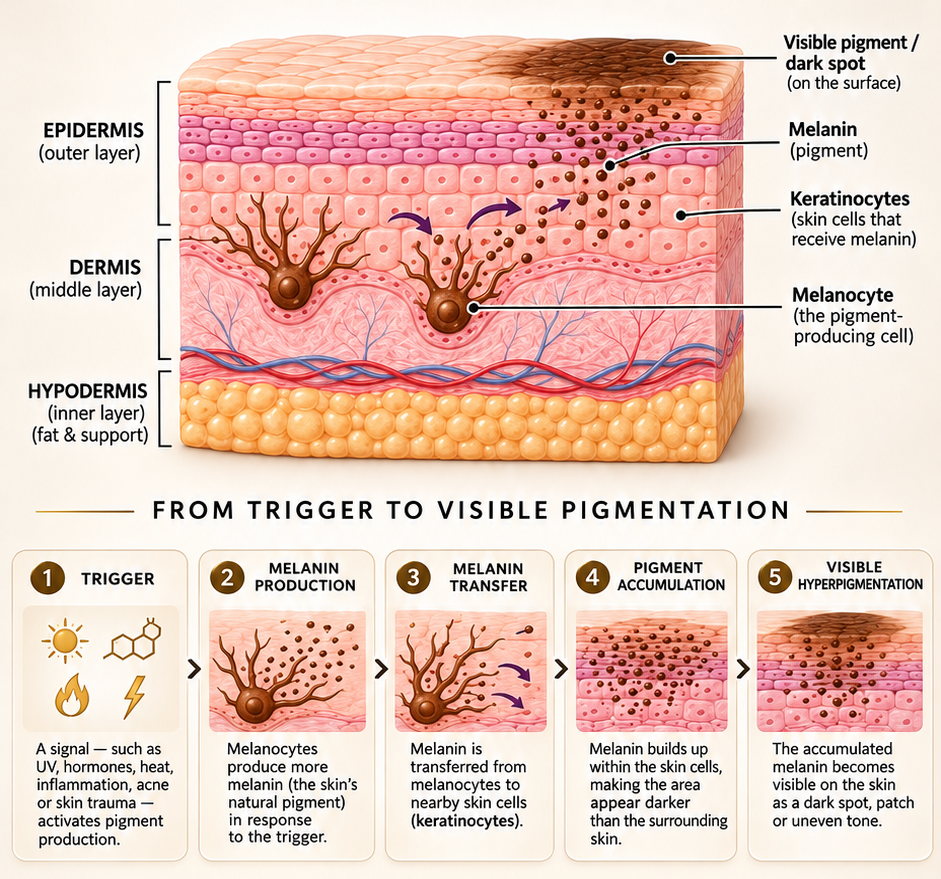
Simplified educational illustration, not a diagnostic skin scan. Different pigmentation conditions behave differently.
PART TWO · YOUR CARE JOURNEY
From understanding to managing.
Your plan should be guided by the cause of the concern, your skin's needs and treatment suitability — not by a one-size-fits-all peel.
We discuss your history, sun exposure, hormones, skincare, medications, skin type and the marks you want to improve. Concerning lesions need medical assessment.
Where suitable, we focus on the skin barrier, consistent sun protection and a homecare routine appropriate for your skin.
Depending on your assessment, this might include a Cosmelan programme, Spicule Peel or skincare-led management. Some clients should avoid or postpone treatments.
Following any treatment, aftercare and skin monitoring help guide the next step. Improvement is gradual, and responses vary.
Regular sun protection, suitable homecare and managing triggers help maintain improvements. Some forms, including melasma, can recur.
WHY THE JOURNEY MATTERS
Skin progress isn't always a straight line.
The aim isn't to promise that every mark will disappear. It's to understand what's driving your concern, choose safe options and support the health of your skin with a sustainable plan.
ASK CLAIRE ABOUT YOUR SKIN↗BACK TO PIGMENTATION SPECIALIST←This is general skin education informed by advanced pigmentation practitioner training. It does not replace medical assessment or guarantee a treatment result. New, changing or suspicious pigmented lesions should be reviewed medically.